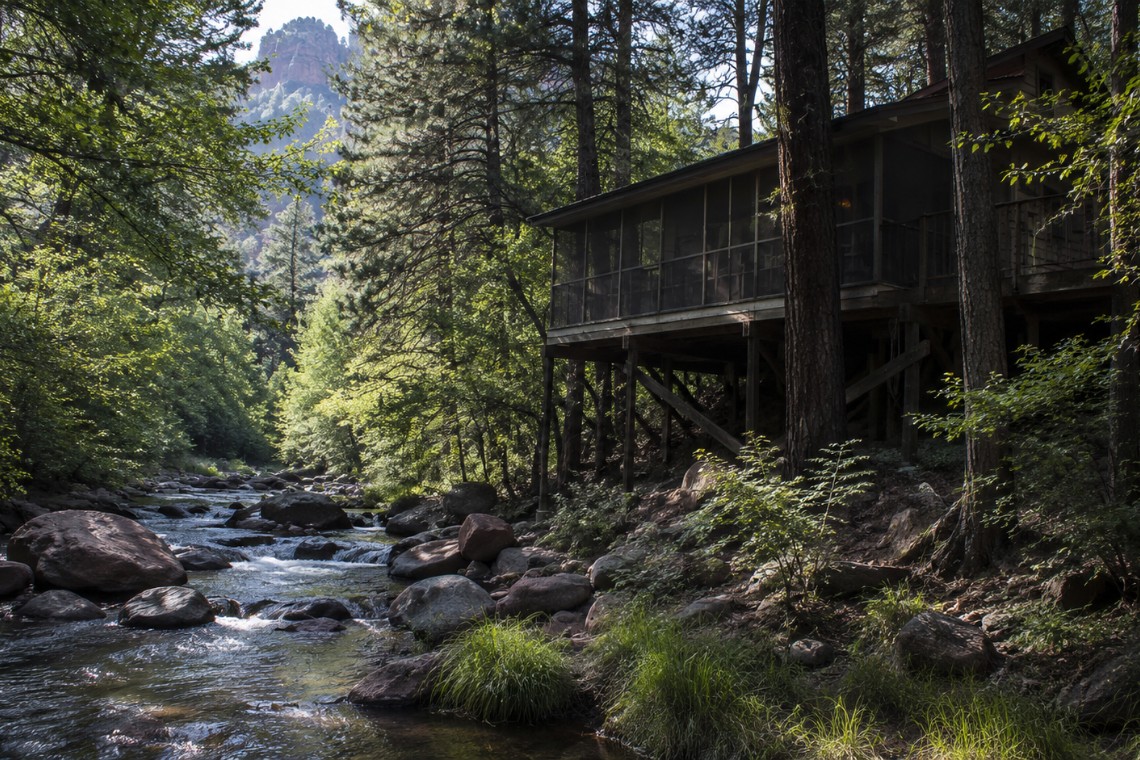
The Junipine creekhouses that back onto Oak Creek do not really have decks, they have observation platforms, screened porches raised on stilts so guests can watch the current move eight feet below the railing. Owners who have held property here for years say the sound of the creek never fades into background noise the way traffic or wind eventually does.
That kind of proximity to moving water is rare anywhere in Sedona, Arizona, and it is the defining trait of Junipine, a resort and creekhouse community tucked into the tall pines of Oak Creek Canyon. This guide is for buyers who want a canyon retreat built around a creek rather than a standard subdivision lot, and who want to understand how Junipine’s membership-style resort structure compares to conventional Oak Creek Canyon real estate.
What Makes Junipine Different Within Sedona, Arizona
Junipine is a resort and creekhouse community set amid tall pines in Oak Creek Canyon, built around individually designed creekhouses instead of the standalone home lots found in most Sedona, Arizona neighborhoods.
That single distinction changes almost everything about how the community functions. Where a typical Oak Creek Canyon parcel is bought, built, and owned outright the way a house in West Sedona or the Village of Oak Creek would be, Junipine’s creekhouses sit inside a resort framework, with shared grounds, a managed setting, and an ownership pattern closer to a private club than a conventional platted subdivision.
Buyers sometimes ask, is Junipine a neighborhood or a resort? The honest answer is both. It functions as a residential community for owners who want a canyon address, and it operates with the amenities and oversight of a resort, which is exactly what draws people who want the forest and creek setting without managing a stand-alone property themselves.
Location Within Oak Creek Canyon
Junipine sits along Highway 89A, the single scenic route that threads Oak Creek Canyon from the rim above Sedona down toward Uptown. The drive itself is part of the experience, a narrow, switchback road shaded by tall pines and sycamores that follows the creek for miles.
That same road is the only way in or out, which owners weigh carefully before buying. Anyone considering nearby recreation can get a feel for the corridor’s character through spots like Oak Creek Canyon camping, which sits within the same forested stretch and shares the canyon’s seasonal rhythms.
Real Estate Snapshot: Creekhouses, Not Conventional Lots
The Junipine real estate model centers on creekhouses within a resort community, priced and positioned differently than the detached, lot-based homes found elsewhere in Oak Creek Canyon and across Sedona, Arizona.
Because ownership here is structured around the resort and its creekhouses rather than individually subdivided acreage, ownership costs are priced in line with what a managed, amenity-rich canyon property commands rather than a raw or lightly improved Oak Creek Canyon lot. Home styles favor cabin-influenced architecture, wood siding, covered porches, and river-rock accents that echo the surrounding pines, a look consistent with the historic settlements scattered through the canyon.
What is driving demand right now is straightforward. Buyers who love the idea of an Oak Creek Canyon cabin but do not want the ongoing maintenance of a stand-alone forest property are drawn to a structure where much of that upkeep is handled collectively.
What to Expect Compared With Other Canyon Properties
Junipine will typically read as more turnkey than a private cabin further up the canyon, since the resort structure absorbs some of the maintenance and access questions that come with owning acreage along the creek outright. That trade-off, less full autonomy in exchange for less individual burden, is worth sitting with before making an offer.
Anyone comparing Junipine against other Oak Creek Canyon options, or against Sedona’s other five areas altogether, can start with a broad view of what is currently on the market by browsing current Sedona listings before narrowing to the canyon specifically.
Daily Life in a Creekside Resort Community
Daily life at Junipine revolves around the creek, the pines, and a canyon setting that puts residents minutes from trailheads yet a genuine drive from Sedona’s commercial core.
Mornings tend to start with the creek itself, whether that means coffee on a screened porch listening to the water or an early walk along the grounds before the day’s canyon traffic picks up. The tall pine canopy keeps the air noticeably cooler than West Sedona or the Village of Oak Creek, which residents feel most in July and August when the desert floor is baking and Junipine still sits in shade.
What does it feel like to live in Oak Creek Canyon full time? Ask most Junipine owners and they will mention the quiet first, then the seasons. Unlike the red rock formations near the Y, the canyon actually changes color with the calendar, sycamores turning gold in October and the creek running high with spring runoff.
Access to Trails and Open Space
Junipine’s location inside Oak Creek Canyon puts several of the canyon’s signature hikes within a short drive. The West Fork Trail is one of the best known, a canyon walk that crosses the creek repeatedly beneath towering canyon walls, and it sits close enough to Junipine that it functions almost like a neighborhood trail for residents.
That kind of access is part of why Oak Creek Canyon appeals to a different buyer than the rest of Sedona, Arizona. It is less about proximity to shopping and galleries and more about being inside the landscape itself, with the creek, the pines, and the trail network as the daily backdrop rather than an occasional weekend destination.
Tradeoffs Worth Knowing
Living inside the canyon comes with real tradeoffs that are worth naming plainly. Highway 89A is the only access road, which means seasonal congestion on busy weekends, especially during fall color season and summer holidays, and winter driving conditions that call for more caution than a West Sedona commute.
Shade that feels wonderful in August brings colder, damper winters than the desert floor, and canyon residents should factor in fire and flood awareness given the forested terrain and creek corridor. Utilities, cell coverage, and internet service also vary by property in the canyon, so buyers should verify specifics for any Junipine unit at the time of purchase rather than assume they match West Sedona standards.
Who Buys Property at Junipine
Junipine attracts buyers who want a forest and creek lifestyle inside Sedona’s boundaries without taking on full ownership of an isolated canyon cabin.
That includes second-home buyers who want a retreat they can use seasonally without worrying about year-round upkeep, since the resort structure covers much of what a stand-alone cabin owner would otherwise manage solo. It also includes buyers transitioning out of high-maintenance properties elsewhere who still want the sensory experience of Oak Creek Canyon, the creek sound, the shade, the cabin architecture, without the full workload of raw acreage.
A smaller group of buyers see Junipine as an investment tied to the resort’s operations, valuing the built-in demand that comes with a known name inside a scenic, high-traffic stretch of the canyon. Each of these buyer types shares one thing: a preference for a managed, community-based approach to canyon ownership over a fully independent one.
How Junipine Fits Sedona’s Current Market
Junipine sits inside a broader Sedona, Arizona market that is currently defined by steady demand and homes taking longer to sell than in past peak years.
For the July 2026 reporting period, the latest available data shows a median sold price of $985,000 and an average sold price of $1,103,830 across Sedona. Homes are taking longer to move than in tighter markets, with 81 days on market on average and a 52-day median, while 236 active listings, 45 new listings, and 41 closed sales round out the picture of a market with real inventory and room for buyers to be selective.
Within that context, a niche property type like a Junipine creekhouse tends to draw a specific kind of buyer rather than broad competitive bidding, since it is not a like-for-like comparison to a standard single-family home. That can work in a buyer’s favor, since demand for resort-style creekhouses moves somewhat independently of the wider Sedona median, but it also means patience matters, since the right unit inside a specific canyon community does not turn over as often as a typical West Sedona listing.
Is now a good time to buy in Oak Creek Canyon? With longer average days on market across Sedona, Arizona right now, buyers interested in a property like Junipine have more room to evaluate a purchase carefully than they would in a faster-moving cycle.
Working With a Local Canyon Specialist
Buying a creekhouse inside a resort community calls for a different kind of guidance than a standard Sedona home purchase, since the ownership structure, access questions, and canyon-specific tradeoffs are not always obvious from listing photos.
Angelo Davis, REALTOR® at RE/MAX Sedona, works with buyers across all six of Sedona’s areas, including the specific access, utility, and seasonal questions that come with a canyon property like Junipine. That local, area-by-area familiarity is part of what he calls the Elevated Sedona Real Estate Experience, a standard built on knowing how each corner of Sedona, Arizona actually lives day to day, not just how it looks in a photo.
Frequently Asked Questions
What is Junipine in Sedona, Arizona?
Junipine is a resort and creekhouse community set amid tall pines in Oak Creek Canyon, located along Highway 89A north of Sedona, Arizona. Rather than standard subdivided lots, ownership here centers on individually designed creekhouses within a managed, membership-style resort setting.
Is Junipine a good place to buy a second home near Sedona?
Junipine works well for buyers who want a canyon retreat with less ongoing upkeep than a stand-alone cabin. Because the resort structure handles much of the shared maintenance, owners who split time between Junipine and another home tend to find it easier to manage than fully independent canyon acreage.
How is Junipine different from other Oak Creek Canyon homes?
Junipine is built around creekhouses inside a resort community rather than conventional platted lots, which is the main difference from most Oak Creek Canyon real estate. That structure trades some individual autonomy for shared amenities and less solo maintenance responsibility.
What is the driving distance from Junipine to Uptown Sedona?
Junipine sits north of Uptown along the single scenic route through Oak Creek Canyon, Highway 89A. The drive winds along the creek through forested switchbacks, so travel time can run longer than the mileage suggests, especially during busy fall color weekends.
What trails are near Junipine in Oak Creek Canyon?
The West Fork Trail is one of the best-known hikes near Junipine, a canyon walk that crosses the creek repeatedly beneath tall canyon walls. Its proximity to Junipine is a major draw for owners who want trail access as part of daily life rather than an occasional outing.
Do Junipine properties have reliable internet and cell service?
Internet and cell coverage vary by property throughout Oak Creek Canyon, including at Junipine, so buyers should verify current service for any specific unit at the time of purchase. Canyon terrain and tree cover can affect signal differently than in West Sedona or other open areas.
How does Junipine compare to Sedona’s overall housing market right now?
For the July 2026 reporting period, the latest available data shows a median sold price of $985,000 across Sedona, Arizona, with homes averaging 81 days on market. Junipine’s creekhouses represent a smaller, resort-specific niche within that broader market, so pricing and availability follow their own pattern rather than tracking the citywide median directly.
Ready to see what is currently available inside Junipine and the rest of Oak Creek Canyon? A conversation before you tour can save real time once you are standing creekside.
