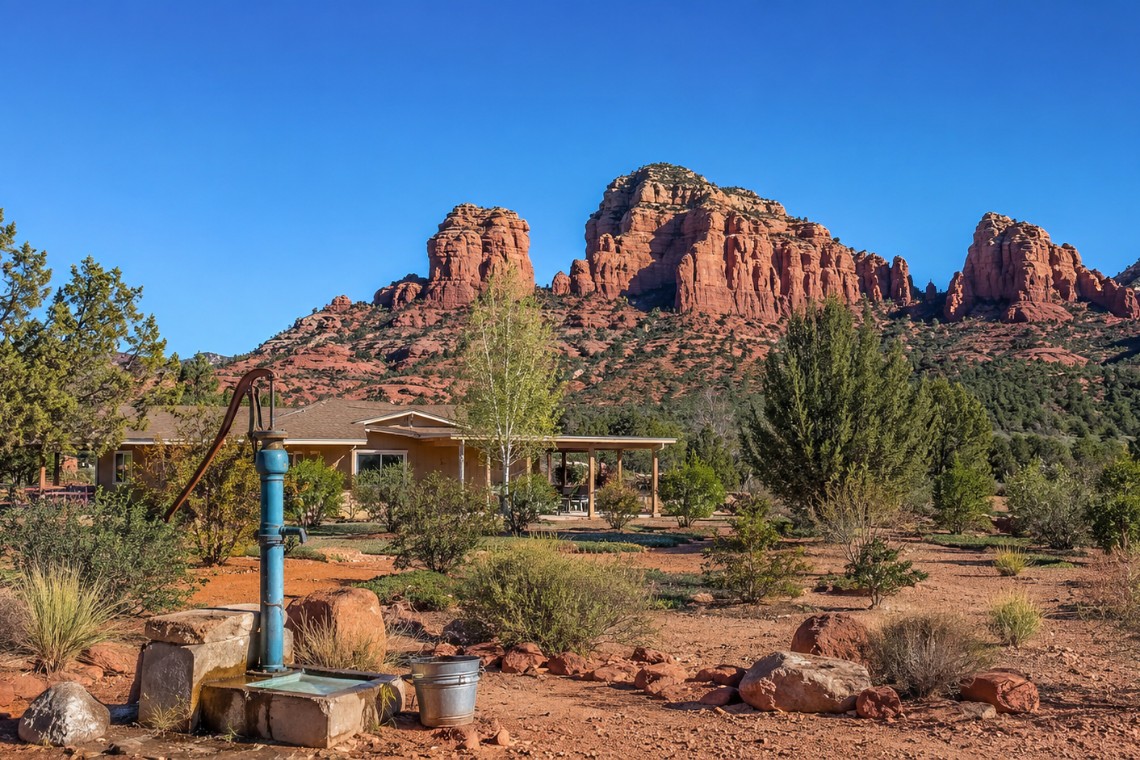
Water in the American West is never a simple story. In the Verde Valley and Sedona, Arizona, the conversation about water rights and private wells is one that every buyer of rural or semi-rural property needs to have before signing anything.
Most homes in the incorporated city of Sedona connect to a municipal water system. But buyers looking at properties in unincorporated areas of Yavapai County, in the Village of Oak Creek, or on larger rural parcels will often encounter private wells, and the rules governing Arizona water rights are specific enough that understanding them matters.
Municipal Water vs. Private Wells in the Sedona Area
The incorporated city of Sedona, Arizona is served by the City of Sedona Water Department, which draws from Oak Creek and operates a municipal distribution system. Properties within city limits connected to this system do not rely on private wells and are subject to city water rates and availability.
Properties in the unincorporated areas around Sedona, including portions of the Village of Oak Creek, Cornville Road corridor properties, and larger rural parcels in the Verde Valley, may rely on private wells. When a property has a well, the buyer’s due diligence process should include a professional well inspection covering water quantity, water quality, and the mechanical condition of the pump and storage system.
Arizona Water Rights: The Basics
Arizona operates under a prior appropriation doctrine for surface water and a separate framework for groundwater. In the Verde Valley, which includes the Sedona, Arizona area, the Verde River watershed is a regulated basin with significant water rights history. Private landowners do not have unlimited rights to extract groundwater simply by virtue of owning land in all areas.
Arizona’s Active Management Areas (AMAs) and Irrigation Non-Expansion Areas (INAs) govern groundwater use in portions of the state. The Verde Valley falls under specific rules that differ from the Phoenix or Tucson metro areas. Buyers purchasing rural property with well-dependent water should consult with an Arizona water rights attorney if they have questions about their specific parcel’s water access.
What to Know When a Property Has a Well
When evaluating a well-dependent property in the Sedona, Arizona area, buyers should request a well disclosure and inspection as part of the standard due diligence process. Key questions include: when was the well drilled and at what depth, what is the documented water production rate, when was water quality last tested, and is there a current water quality report available.
Arizona requires sellers to disclose known well conditions, but a professional inspection adds a layer of independent verification that protects buyers from surprises. Well water quality testing should cover potability standards and any area-specific contaminant concerns.
Water Sharing Agreements and Community Water Systems
Some rural properties and subdivisions in the Verde Valley area use community water systems or shared well agreements rather than individual private wells. These arrangements involve shared infrastructure and maintenance costs that may be governed by a recorded CC&R or water sharing agreement. Buyers should review any such agreements carefully during escrow.
Angelo Davis, REALTOR® at RE/MAX Sedona, works with buyers navigating both city-connected and well-dependent properties in the Sedona area and can identify the applicable water infrastructure for any property under consideration.
Do Private Wells Affect Home Value in Sedona?
Private wells are common on rural properties in the Verde Valley and Sedona, Arizona area and do not automatically diminish property value. What matters is the quality and quantity of water the well produces and the condition of the system. A well-documented, high-producing well with clean water is a functional asset. A poorly documented or aging system represents a known risk that buyers should price into their offer.
Frequently Asked Questions
Do homes in Sedona use well water or city water?
Most homes within the incorporated city of Sedona, Arizona use municipal water provided by the City of Sedona Water Department. Properties in unincorporated areas, rural parcels, and some Village of Oak Creek locations may rely on private wells.
What should I check when buying a property with a well in Sedona?
When buying a well-dependent property near Sedona, Arizona, buyers should request a professional well inspection covering water quantity, water quality, pump condition, and storage system. A current water quality test for potability and local contaminants is strongly recommended.
What are Arizona water rights rules for homeowners?
Arizona operates under a prior appropriation system for surface water and has specific groundwater rules that vary by area and basin designation. Buyers of rural properties in the Verde Valley area should understand whether their parcel falls under any groundwater management area rules.
Is well water safe to drink in the Sedona area?
Well water quality in the Sedona, Arizona area varies by location and well depth. Professional testing is the only way to confirm potability and the absence of local contaminants. Sellers are required to disclose known water quality issues, but an independent test is the buyer’s best protection.
Do I need a water rights attorney to buy rural property near Sedona?
For rural properties with significant water rights implications or complex shared water agreements in the Sedona, Arizona area, consulting an Arizona water rights attorney during due diligence is a reasonable precaution. Most standard residential transactions within city limits do not require this step.
What is a community water system in Arizona?
A community water system in Arizona is a shared water infrastructure serving multiple properties, often in rural subdivisions. These systems have their own regulations, inspection requirements, and maintenance obligations. Buyers should review any governing documents and the system’s compliance record during due diligence.
—
Water access is one of the practical questions that gets resolved before you close, not after. If the property you are considering has a well or a shared water system, let’s make sure the full picture is in front of you.
