
The sellers who do best in Sedona are rarely the ones who picked the perfect month. They are the ones whose home was genuinely ready the week the right buyer finally drove down Highway 179.
That distinction carries more weight here than almost anywhere else in the country. Sedona, Arizona does not run on the national housing calendar, and a seller planning around the national calendar is planning around someone else’s market.
What follows is the structural pattern underneath listing season in this market. How visitors turn into buyers, how long that conversion actually takes, what the monsoon does to a property’s presentation, and where the real competition sits.
The answer at the end is not a month. It is a condition, and it is the one variable a seller genuinely controls.
Why the National Spring Rule Does Not Map Onto Sedona
The national spring rule exists because most of the country sells to families moving between school years. Sedona, Arizona sells largely to second-home and relocating buyers, whose calendar is set by travel rather than by school registration.
A family in a suburban market times its move to a school district start date, which pins the entire national market to one narrow spring window. Almost none of that logic applies to a buyer choosing a second home at roughly 4,500 feet in red rock country.
That buyer is deciding where to spend part of a year, not where to enroll a child in September. Their decision window opens when they are physically here and closes when the trip that convinced them is far enough behind them to feel like a memory.
The practical consequence is that this market has several soft peaks rather than one hard spring peak. Advice built on a single national curve will point a Sedona seller at the wrong month more often than it points them at the right one.
There is a second problem with importing the rule. The spring peak in a national dataset is a peak in listing volume, and listing volume is competition, which is exactly the thing a seller is trying to have less of.
How the Sedona Visitor Calendar Turns Into Offers
Most Sedona buyers visit before they buy, and the gap between that visit and a written offer commonly runs several months. That lag is the single most useful timing fact a Sedona seller can hold.
The visitor calendar here has two long shoulders rather than one summer season. Spring brings comfortable hiking weather and the heaviest sightseeing traffic, and fall brings a second wave carrying a larger share of people quietly evaluating whether they could actually live here.
A buyer who falls for the light on a March trip does not usually write an offer in March. They go home, they talk about it for a season, they come back to confirm the feeling was real, and then they engage an agent.
That is why a listing appearing in the middle of a visitor peak is often arriving late for the buyers already inside that peak. It is arriving right on time for the ones who visited a season earlier and are only now ready to act.
For sellers asking how to sell a house in Sedona, Arizona without guessing at the calendar, this is where the answer begins. Sell to the buyer whose trip already happened, not to the one stepping out of the rental car today.
The lag also explains why this market rewards patience over urgency. A property that sits well presented through a full quarter is visible to the entire cohort of buyers converting from an earlier visit, and that cohort is larger than any single week of foot traffic.
What the Latest Sedona Market Data Says About Timing
The latest available data shows 257 active listings in Sedona for the June 2026 reporting period, down 8.2% from May and up 8.9% from June 2025. Supply is rebuilding year over year, which changes what a listing competes against.
New listings tell the sharper story. The same period recorded 58 new listings, a 52.6% jump over the 38 that arrived in June 2025, which means a seller listing today stands beside noticeably more fresh competition than a seller did a year ago.
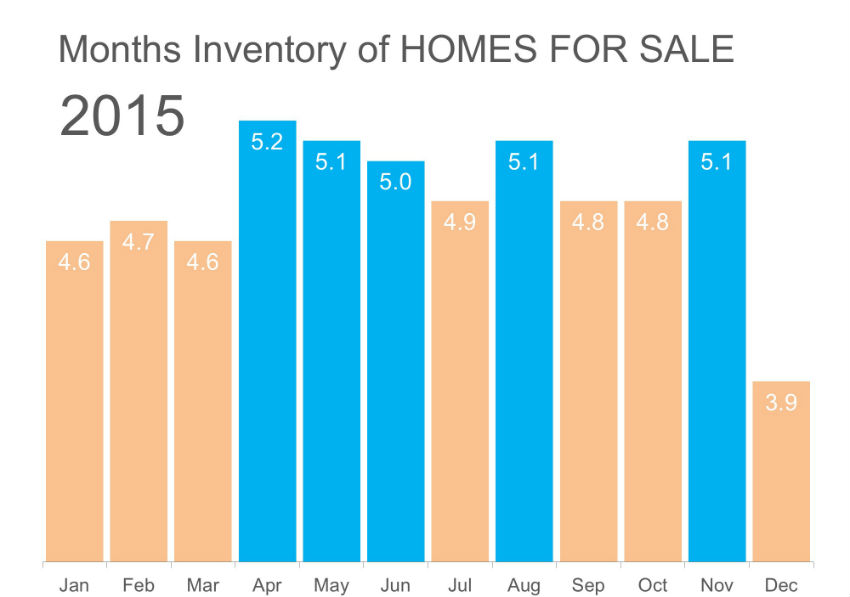
Absorption moved with it. Months of inventory reached 5.98, up from 4.91 in May and 4.72 a year earlier, and that shift is the difference between a market that clears a home quickly and one that asks a home to earn its buyer.
Time on market reflects the same reality. The average time to contract ran 91 days against a median of 64 days, and the spread between those two figures says most homes go under contract inside roughly two months while a long tail of mispriced or underprepared listings drags the average upward.
Transaction activity itself was thin in the period. There were 12 homes that went under contract and 43 closed sales, both down against May and against the prior June, which reads as a normal early summer pattern rather than a verdict on any individual home.
Price figures drawn from a month that small deserve caution. The median sold price landed at $850,000 and the average sold price at $1,055,480, and on only 43 closings the month over month move in the median is a mix artifact, meaning it reflects which homes happened to close rather than a change in what homes are worth.
The number that actually helps a seller decide is the sale to list ratio. Homes captured 97.9% of asking price, up from 96.3% in May and 97.3% a year earlier, which tells a seller that correctly priced Sedona homes are still landing very close to their number.
Read together, those figures argue for preparation rather than for hurry. Understanding how the list price gets set is the other half of the work, and it starts with how comparable sales shape a home’s list price before anything is published to the market.
Monsoon Season Is a Presentation Variable, Not a Dead Zone
Monsoon season runs roughly July through September in Sedona, Arizona, and it changes how a property photographs and shows rather than whether it sells. Plan around the storms instead of around the season.
Afternoon storms here are dramatic and short. They also produce the greenest landscape of the year, the deepest color in the rock, and skies that make ordinary exterior photography look considered.
The real monsoon risks are logistical rather than seasonal. Dirt driveways and unpaved access roads show their worst face after a heavy afternoon, drainage flaws become visible, and a showing booked for four in the afternoon can be washed out in a way a ten in the morning showing never is.
Sellers who work with the season schedule photography for a clear morning, book showings ahead of the afternoon build, and handle grading and drainage before the listing goes live. Sellers who avoid the season entirely hand three months of visitor traffic to their competition.
Shoulder Season and the Competition Question
Shoulder season is the stretch when visitor traffic is still strong but new listings thin out. A well prepared home standing against fewer direct comparisons is worth more than the same home standing in a crowd.
Competition is the variable most sellers underweight. A home is never priced against the market in the abstract, it is priced against the handful of genuinely similar homes a buyer walks through on the same weekend.
When new inventory rises, as it has year over year, the number of those direct comparisons rises with it. When new inventory thins during a shoulder window, the same home occupies more of the buyer’s attention without changing a single thing about itself.
That is the argument for listing slightly off the obvious peak rather than inside it. Fewer sellers competing for the same set of eyes is a structural advantage that no amount of marketing spend replicates.
It is also why the question of whether spring is really the best time to sell in Sedona has an unsatisfying answer. Spring is the best time to have buyers, and a less good time to have neighbors listing beside you.
The Honest Answer: List When the Property Is Ready
The best time to list a home in Sedona is the week the property is genuinely ready to be seen. Readiness beats the calendar, because a buyer who is here this month does not care what month it is.
Readiness is testable, and it has four parts. The property presents the way it will photograph, the price is defensible against current comparable sales, the deferred maintenance a buyer will notice is already handled, and the seller is prepared for showings, feedback and negotiation.
The presentation test is the one sellers most often skip. A home is ready when a stranger walking through forms an impression of the house rather than an impression of the people living in it, and the preparation work that gets a home to that point usually takes longer than a seller expects.
The pricing test comes second, and it is unforgiving. A list price unsupported by recent comparable sales in Sedona, Arizona costs a seller the first three weeks of exposure, which are the only weeks a listing is genuinely new to every buyer watching that price band.
The maintenance test is the simplest of the four. Anything a buyer would flag during inspection and use to reopen a negotiation is cheaper to resolve before the listing than after an offer is in hand.
The last test belongs to the seller. Showings interrupt a life, feedback is sometimes blunt, and a seller who is not ready for that will end up making timing decisions out of fatigue rather than out of strategy.
This is where a local read earns its keep. Angelo Davis, REALTOR® at RE/MAX Sedona, works the timing question backward from the property and the buyer pool rather than forward from a month on a calendar, and the starting point is usually a clear-eyed look at what the home is actually worth in today’s market.
A seller who reaches readiness in October lists in October. A seller who reaches it in July lists in July, with the photography scheduled for a clear morning.
Frequently Asked Questions
When is the best time to list a home in Sedona, Arizona?
The best time to list a home in Sedona, Arizona is the week the property is genuinely ready, not a fixed month on the calendar. Because this market sells largely to second-home and relocating buyers whose decisions follow a visit rather than a school year, readiness and preparation move the outcome far more than the season does.
Does the spring market matter for Sedona sellers?
Spring matters in Sedona, but far less than the national spring rule suggests. Sedona, Arizona has several soft peaks driven by visitor traffic rather than one hard spring peak, and listing inside the busiest window usually means competing against the largest number of similar homes.
How long does it take to sell a home in Sedona right now?
The latest available data shows an average of 91 days to contract in Sedona for the June 2026 reporting period, against a median of 64 days. The gap between those two figures means most homes go under contract inside about two months, while a smaller group of overpriced or underprepared listings pulls the average higher.
Should I avoid listing my Sedona home during monsoon season?
No, monsoon season in Sedona, Arizona is a presentation variable rather than a reason to stay off the market. Storms are brief and concentrated in the afternoon, the landscape is at its greenest, and sellers who schedule photography and showings for clear mornings keep three months of visitor traffic in play.
How much inventory is on the Sedona market right now?
The latest available data shows 5.98 months of inventory in Sedona for the June 2026 reporting period, up from 4.91 months in May and 4.72 months a year earlier. There were 257 active listings, down 8.2% from May but up 8.9% year over year, so a seller today faces more standing competition than a seller did last summer.
How close to asking price are Sedona homes selling?
Sedona homes captured 97.9% of asking price in the June 2026 reporting period, up from 96.3% in May and 97.3% a year earlier. That figure tells a seller a defensible list price still lands very close to its number in Sedona, Arizona, while an aspirational one absorbs the discount instead.
The most useful conversation a Sedona seller has usually happens before a listing date is chosen, not after it is already set. A short review of the property, the calendar and the competition tends to answer the timing question on its own.