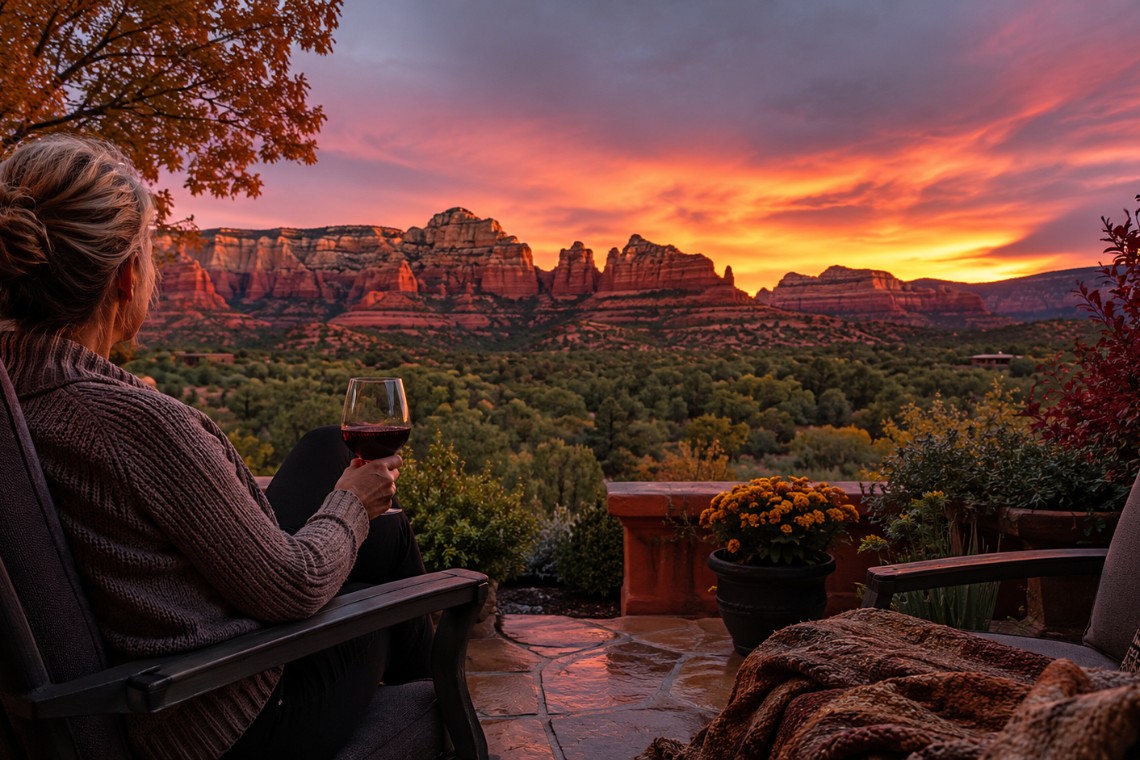
Sedona residents don’t organize the year by months the way most people do. The rhythm here is set by something else: trail conditions, tourist volume, and about six annual events that the community treats as non-negotiable.
Understanding the seasonal rhythm of Sedona, Arizona is one of the first things new residents discover and one of the things long-time residents most appreciate about living here. The year has a texture to it that no calendar can fully capture but that anyone who lives here learns to read fluently within the first few seasons.
Spring in Sedona: Peak Season and How Residents Adapt
Spring is Sedona’s most intense season from a visitor volume standpoint. From mid-March through early May, the combination of school spring breaks, post-winter pent-up travel demand, and genuinely perfect weather fills every trailhead, restaurant, and road in Sedona simultaneously. Parking fills before 9 a.m. at popular sites. Reservations at the better restaurants become necessary at least a week out.
Residents who have lived here through multiple springs develop a kind of spring-specific schedule that allows them to enjoy the season without fighting the crowds. Morning hikes that begin before 7 a.m. finish before the tourist buses arrive. Grocery shopping happens midweek. The town’s own social calendar continues on its own track largely independent of the visitor surge, and the Sedona International Film Festival in February functions as a kind of community kickoff that precedes the tourist peak and remains distinctly local in character.
The wildflowers in spring are legitimate. The desert in bloom at 4,350 feet is worth the traffic, and residents know exactly where to go to see it without sharing the moment with a crowd.
Summer: When Sedona Belongs to the Residents Again
The summer quiet in Sedona is one of the town’s best-kept secrets. Once school resumes in August and the spring break visitor wave has passed, Sedona’s visitor volume drops meaningfully, and the town returns to something closer to its actual community character. Restaurants are accessible. Trails are quieter in the mornings. The social fabric of the resident community tightens around the long summer evenings.
The monsoon season, which typically begins in early to mid-July and runs through September, brings afternoon thunderstorms that transform the red rock landscape. Rain on sandstone produces a smell that Sedona residents describe as one of the defining sensory signatures of living here. The monsoon also brings the season’s highest humidity, which still barely registers by the standards of coastal or Midwest climates.
The Sedona Yoga Festival in June marks the transition from spring to summer with a community event that is genuinely local in orientation even as it draws visitors. It functions as a social reset after the spring tourist peak.
Fall: Second Peak and the Arts Season
October is the other peak in Sedona’s visitor calendar, anchored by the Sedona Arts Festival and the fall leaf color in Oak Creek Canyon. The visitor volume in October rivals spring, but the character of the crowd tends toward the arts-oriented and culturally engaged rather than the pure outdoor adventure demographic of spring.
Residents treat October as one of the best months of the year. The temperatures are perfect, the red rock landscape is at its richest visual quality in the autumn light, and the social calendar is full of gallery openings, festival events, and community gatherings that use the season deliberately. The Oak Creek Canyon leaf color, while not on the scale of New England foliage, is genuinely beautiful and makes the canyon drives extraordinary.
Winter: Quiet Season and Best Hiking
January through mid-March is Sedona’s quietest period and, for trail enthusiasts, arguably its best. The winter light in Sedona is extraordinary, with low sun angles that create red rock shadows and color saturation that the high-angle summer sun doesn’t produce. The trails are uncrowded, the mornings are cold enough for layers but warm by midday, and the entire landscape carries a focused quality that summer crowds disperse.
The Festival of Lights at Tlaquepaque in December bridges fall and winter with the most beloved community event of the year. Christmas in Sedona, Arizona is quiet, beautiful, and occasionally white, with the red rock landscape under snow producing images that surprise even longtime residents.
What the Seasonal Rhythm Means for Buying Timing
The seasonal calendar has real implications for buyers. Properties listed in peak spring or fall season often sell quickly against competitive interest. Winter listings may offer more negotiating room but less competition. Buyers who can time their search to the shoulder seasons sometimes find better purchase conditions, though in the luxury segment, compelling properties generate demand in any season.
Browse current listings with the seasonal calendar in mind. Angelo Davis, REALTOR® at RE/MAX Sedona, can advise on how the current season’s market conditions affect your specific buying strategy.
Frequently Asked Questions
What is the best time of year to live in Sedona?
Most Sedona residents would cite late fall (October through November) and late winter (February through March) as the best periods: ideal weather, reasonable visitor volume, and the community’s social calendar at full engagement. Summer has advocates among residents who value the quiet and the monsoon season’s drama.
When does Sedona get the most tourists?
Spring (mid-March through May) and fall (October through early November) are Sedona’s peak tourist periods. Summer sees elevated summer family travel, and winter holidays bring a smaller but consistent visitor wave. January through February is the quietest period most years.
Does Sedona have a rainy season?
Yes. The monsoon season typically runs from early July through September, with afternoon and evening thunderstorms that can be dramatic. Total monsoon rainfall varies annually. The rest of the year is predominantly dry, with winter precipitation arriving as rain at lower elevations and snow at Sedona’s altitude during cold fronts.
What seasonal events do Sedona residents prioritize?
The Sedona International Film Festival (February), Sedona Yoga Festival (June), Jazz on the Rocks (September), Sedona Arts Festival (October), and Festival of Lights at Tlaquepaque (December) are the events most consistently described by Sedona residents as non-negotiable annual calendar anchors.
Is summer livable in Sedona or too hot?
Summer in Sedona is genuinely livable and is preferred by many residents specifically because the visitor volume drops. Highs in the upper 80s to mid-90s are comfortable relative to Phoenix’s 110-plus. Morning outdoor activities are practical throughout the summer with appropriate early start times.
The seasonal character of Sedona is one of the things you can describe to someone but not fully communicate until they’ve lived a full year here. The cycle becomes part of how you understand time.
Find a Sedona home and start experiencing the seasonal rhythm for yourself.
