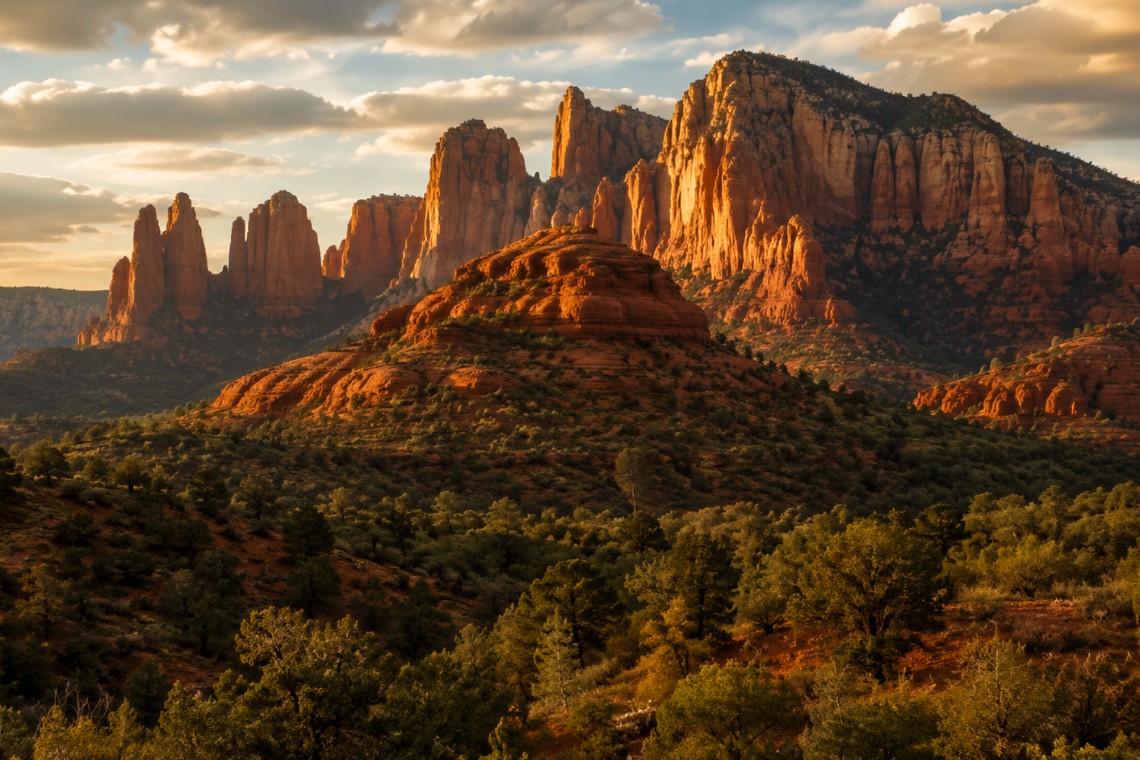
More than a hundred films have been shot in and around Sedona since the early 1920s. The red rock landscape is so cinematically distinct that the question for Hollywood was never whether to come. It was whether any audience would believe the landscape was real.
They did, largely because the red rock formations of Sedona, Arizona defy the visual vocabulary most people bring to a landscape. The vertical striations, the rust and ochre color range, the geometry that looks more designed than geological. The early Western filmmakers who arrived here in the 1920s were working with location as a leading character rather than a backdrop, and the films reflected it.
The Western Film Legacy in Sedona
Sedona’s film career began with the Western genre, which dominated American cinema in the mid-twentieth century. The combination of dramatic red rock formations, photogenic canyon landscapes, and a relatively accessible location made Sedona one of the most-used Western locations in Hollywood history.
Films like “Johnny Guitar” (1954), starring Joan Crawford and Sterling Hayden, used Sedona’s landscape as a primary visual element rather than generic Western background. “Angel and the Badman” (1947), starring John Wayne, shot extensively in and around the Sedona area. “Broken Arrow” (1950), with James Stewart and Jeff Chandler, treated the landscape with the same visual seriousness that would define Sedona’s cinematic identity across decades.
The character actors, wranglers, and location scouts who passed through Sedona during the Western era left behind a cultural memory that still runs through the town. Old photographs in local establishments document the production crews, the stars, and the specific formations that appeared on screens across the country.
Modern Productions and Contemporary Film Culture
Hollywood’s relationship with Sedona did not end with the Western. Modern productions have found the landscape equally useful for different visual purposes. Television productions, commercial shoots, and documentary work have continued the tradition of using Sedona’s red rock environment as a production asset that no set designer can replicate.
The “Westworld” series used Arizona locations including areas proximate to Sedona for its distinctive high-desert visual language. National commercial production in Sedona, Arizona is a constant low-level activity, with automotive campaigns, outdoor recreation brands, and luxury goods advertisers regularly staging productions against the red rock backdrop.
The Sedona International Film Festival as Living Legacy
The Sedona International Film Festival, held annually in February at the Mary D. Fisher Theatre and throughout the community, is the most direct institutional expression of Sedona’s film heritage. The festival draws independent films, documentary work, and curated programs that treat cinema as the serious art form Sedona’s long relationship with the medium demands.
For residents, SIFF is the social and cultural anchor of the late-winter calendar. The conversations in lobby spaces during festival week, the Q&A sessions with filmmakers, and the community gatherings around specific screenings produce a social experience that goes well beyond attending a film. The festival’s growing reputation attracts films that subsequently receive significant distribution and critical attention.
Film Locations Residents Can Identify Today
Part of the pleasure of Sedona film history for residents is the landscape continuity. The Cathedral Rock formation, the red rock canyon approaches, the Crescent Moon area, and the ridgelines visible from Uptown all appear in recognizable form in films that were shot decades ago. The landscape doesn’t change on a human timescale, which means that a resident who has hiked every trail knows exactly which formations appeared in which films.
Local film history enthusiasts have documented the production history systematically, and the Sedona Historical Society maintains records of the town’s cinematic past. Walking tour formats and casual conversations in local establishments provide access to this knowledge for residents who want to develop it.
How Film Culture Shapes Sedona’s Identity
The film legacy contributes to Sedona’s identity as a place that attracts creative and culturally engaged people. Artists, writers, filmmakers, and performers who have lived and worked in Sedona are numerous enough to form a community rather than a curiosity. The same landscape that drew Western filmmakers in the 1940s draws creative professionals today who use it as a backdrop for work that has nothing to do with Westerns but is equally influenced by the visual power of the setting.
Uptown Sedona is the geographic center of the film festival activity and carries the most direct connection to the town’s cinematic heritage. Browse current listings in the neighborhoods that place you inside this community’s cultural life.
Frequently Asked Questions
How many movies have been filmed in Sedona?
More than one hundred films have been shot in and around Sedona, Arizona since the early 1920s. The majority were Westerns filmed during Hollywood’s golden era of the genre, but modern productions, commercials, and television shoots have continued the tradition.
What famous movies were filmed in Sedona?
Notable films shot in Sedona include “Johnny Guitar” (1954), “Angel and the Badman” (1947), “Broken Arrow” (1950), and numerous other Westerns from the 1940s through 1960s. Modern productions have used the landscape for various projects including commercial work and television series.
When is the Sedona International Film Festival?
The Sedona International Film Festival takes place annually in February, centered on the Mary D. Fisher Theatre in Sedona, Arizona. It is one of the most recognized regional film festivals in the Southwest and draws submissions and attendees from across the country.
Can I visit movie filming locations in Sedona?
Many of the formations and landscape locations used in Sedona’s film history are accessible via public trails and roads. Cathedral Rock, the Crescent Moon area, and the canyon approaches visible from Uptown all appear in historical productions and are part of the standard hiking and sightseeing landscape.
Does Sedona still have active film production?
Yes. Commercial production, documentary work, and occasional film and television projects continue to use Sedona’s landscape. The area around Sedona, Arizona remains one of the most recognizable and sought-after landscape locations in American production.
The films came here because the landscape demanded it. The same is true of the people who eventually stop visiting and start looking for a home.
