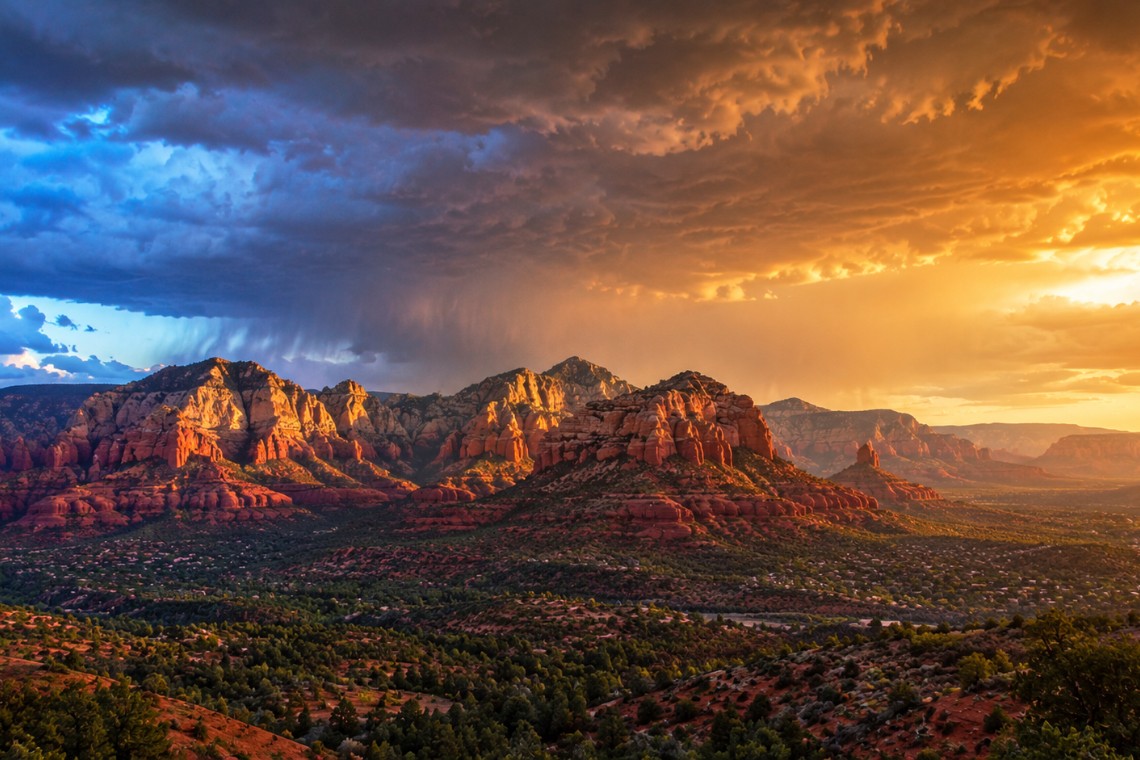
Most people arrive in Sedona with a specific image in mind: brilliant sunshine, red rocks, and eternal summer. What they find instead is that Sedona has an actual four-season climate, and depending on when you arrive or decide to move, you might experience weather that surprises you entirely. At 4,500 feet elevation, Sedona sits high enough that winter snow happens, summer heat doesn’t kill, and spring and fall feel nothing like the Phoenix valley below.
Understanding Sedona’s seasonal rhythms changes how you experience the place, when you visit, and what you’re buying into if you move here.
Winter in Sedona (December, January, February)
Sedona winters are mild compared to most of the country but genuinely cool compared to Phoenix or Tucson. Daytime temperatures typically land in the 50s and low 60s. Nights drop into the 30s and 40s regularly. Snow happens—not every year, but enough that locals don’t dismiss it. December 2004 brought a significant snowstorm that closed roads and reminded everyone that elevation matters.
This is peak tourist season in Sedona. The weather is perfect for hiking and exploring without the heat that makes summer trails exhausting. Hotel rooms are booked months in advance. The town feels crowded, restaurants have reservations-required policies, and parking becomes strategic. For locals, winter is when they stay home or explore less popular trails.
For anyone considering moving to Sedona from a cold climate, winter is when you realize the elevation trade-off is real. You get genuine seasons without the brutal extremes of the Midwest or Northeast. You might need a light jacket for morning coffee, but you won’t be shoveling driveways. The sun is strong enough that southern-facing windows warm homes considerably, and outdoor activities are genuinely pleasant.
Spring in Sedona (March, April, May)
Spring is when Sedona shows why it’s a real estate destination. Temperatures climb from the 60s to the low 80s. Wildflowers bloom (poppies, lupines, brittlebush), hiking is excellent, and the town sits at that Goldilocks moment between tourist season and summer heat. March and April are genuinely beautiful months—comfortable daytime temperatures, cool mornings, and low humidity.
This is the second peak buying season in Sedona real estate. Buyers who missed winter are taking action. Spring is also when many snowbirds return north, opening the market. Days lengthen, and people who’ve been cooped up in winter are ready to commit to moves they’ve been considering.
By late May, heat starts building. Daytime highs reach the mid-80s, and air conditioning becomes something you’re thinking about as you evaluate homes. If you’re moving to Sedona and can choose your arrival month, spring is the obvious choice. The weather is nearly perfect, the market is active, and you’re moving into a season that feels like possibility.
Early Summer in Sedona (June)
June is the pause before monsoon season arrives. Temperatures climb into the 90s, and humidity starts building as atmospheric conditions shift. Days are long. The town thins out—tourists thin out, students leave for summer, and there’s a sense that weather is about to dominate daily life.
For people visiting to explore whether Sedona is the right place to live, June is important because it shows you what the transition to summer feels like. Heat is real, but it’s dry heat. The 95-degree June day feels manageable compared to 95 degrees in the Midwest with humidity. Home air conditioning systems work hard but aren’t overwhelmed. If you visit in June and feel comfortable, you’ll probably be fine with Sedona summers overall.
Monsoon Summer (July, August, September)
This is when Sedona becomes a different place. Afternoon thunderstorms are the dominant weather event. Temperatures peak in early July (often touching 95 to 100 degrees in the valley areas), then moderate slightly as monsoon storms increase cloud cover and bring temporary cooling. Humidity rises, which makes the heat feel different—not the dry heat of early summer, but something closer to what humid climates experience.
Monsoon storms are daily possibilities from late June through August, with the most intense activity in July and August. These aren’t gentle afternoon showers. They’re dramatic thunderstorms that dump water, create wind, and sometimes cause flash flooding. Hiking becomes an early-morning activity, with trails typically abandoned by 2 PM when storms build.
For people considering moving to Sedona, monsoon summer is critical to experience before committing. Some residents love it—the storms, the smell of rain on red rock, the cooling effect after 100-degree days. Others find it stressful. If you can visit in August and feel aligned with what monsoon season brings, you’re probably ready to move.
Fall in Sedona (October, November)
October is when Sedona comes alive again. Monsoon season fades by early September, and October brings perfect hiking and outdoor weather. Temperatures drop from summer peaks into the 80s and low 90s. Humidity drops. The town breathes out after summer intensity.
October and November are genuinely beautiful. Hiking is excellent. Outdoor activities return to schedules. Many Sedona residents consider October the best month in town—the weather of spring without the tourist density of March and April. If you’re visiting to evaluate Sedona as a move, fall timing is nearly as good as spring.
November cools things further. Daytime highs drop into the 70s and 60s. It’s the transitional month between warm fall and winter, and it marks the beginning of snowbird season. People who left in May start returning. Hotels start filling up again. The market shifts from summer quiet toward peak winter activity.
Which Months Matter Most for Real Estate
Sedona’s real estate market has clear seasonal patterns driven by weather and tourism. Spring (March-May) and early fall (October-November) are peak buying seasons. Inventory is highest, buyer activity is highest, and homes at all price points move actively.
Summer (June-August) is slowest for residential transactions. Families who are moving often align with school calendars (June, July, August), which actually creates a counterintuitive dynamic: family homes move in summer despite heat, while luxury homes and retiree-focused properties slow down. The market doesn’t stop, but activity declines significantly.
Winter (December-February) is surprisingly active at the luxury end—wealthy snowbirds and retirees looking for winter homes drive transactions. But for buyer-seller negotiations and home searches overall, spring is the most balanced and active market.
If you’re considering a move to Sedona and timing matters, spring and fall offer the best weather, most inventory, and most active market conditions. If you’re buying a second home for winter, November through February is when you need to look.
Weather and Daily Life—What First-Time Residents Notice
Moving to Sedona means adjusting to seasonal rhythms that are genuinely present. Winter mornings require a light jacket. Summer early mornings are pleasant; summer afternoons require air conditioning. Spring and fall feel like extended gift seasons.
Outdoor activity windows matter. In winter, you have the whole day for hiking. In summer, you plan early mornings and accept that afternoons belong to monsoon storms. In spring and fall, the window is close to 24 hours—genuinely excellent for outdoor-oriented people.
Home costs reflect this too. Cooling costs spike in July and August. Heating costs are modest in winter. Properties with good air circulation, shade from trees or design, and north-facing cooling windows perform better through the year. Southern-facing windows that warm your home in December are assets in winter, liabilities in summer. When you’re evaluating a Sedona home, understanding how design handles seasonal extremes matters.
For Buyers Moving from the Midwest or Northeast
If you’re considering leaving winter behind, Sedona offers a genuine middle ground. You get season change without the ice storms of Minnesota or the gray skies of the Pacific Northwest. Snow happens occasionally but rarely in amounts that require serious snow removal. Most winters, you’re dealing with cold mornings and comfortable afternoons.
The lifestyle shift is real though. People who move to Sedona from cold climates often report missing actual weather variation—the presence of genuine seasonal change. Sedona delivers that, but in a compressed and gentler form than what they left. Spring and fall are shorter. Winter is milder. But the rhythm of seasons is present, and it appeals to people who want climate stability without complete erasure of seasonal variation.
Coming to Sedona for a winter visit and falling in love with it is different from living here through a full year. The test is: can you be comfortable during monsoon season (July-August), and do you actually prefer the trade-off? If you visit in August and think “never again,” summer heat combined with monsoon storms might not be for you. If you visit in August and think “this is interesting,” you’re probably aligned with Sedona’s actual climate profile.
Planning a Visit or a Move
If you’re exploring whether Sedona is the right place for you, timing your visit to experience actual seasonal conditions matters. Spring (April-May) gives you the most positive experience and is genuinely representative of the best Sedona has to offer. Summer (July-August) shows you the authentic challenges and helps you understand whether you’re actually climate-aligned. Winter (December-February) gives you a sense of the beauty tourists see.
If you’re planning a move and have flexibility on timing, spring arrival makes the most sense. The weather is perfect, the market is active, and you’re moving into a season that feels like possibility. If you’re buying a second home for winter, late October through November is the window to look—timing means you move in as weather becomes ideal.
Every season in Sedona has character. Understanding them changes how you experience the place and makes the decision to move here, or visit, much more conscious and grounded. Sedona’s four-season reality is part of why people stay.
Planning a visit to Sedona to explore the real estate market or experience the climate firsthand? Let me know—I can help you make the most of your time here. Search current Sedona listings to see what’s available right now.
