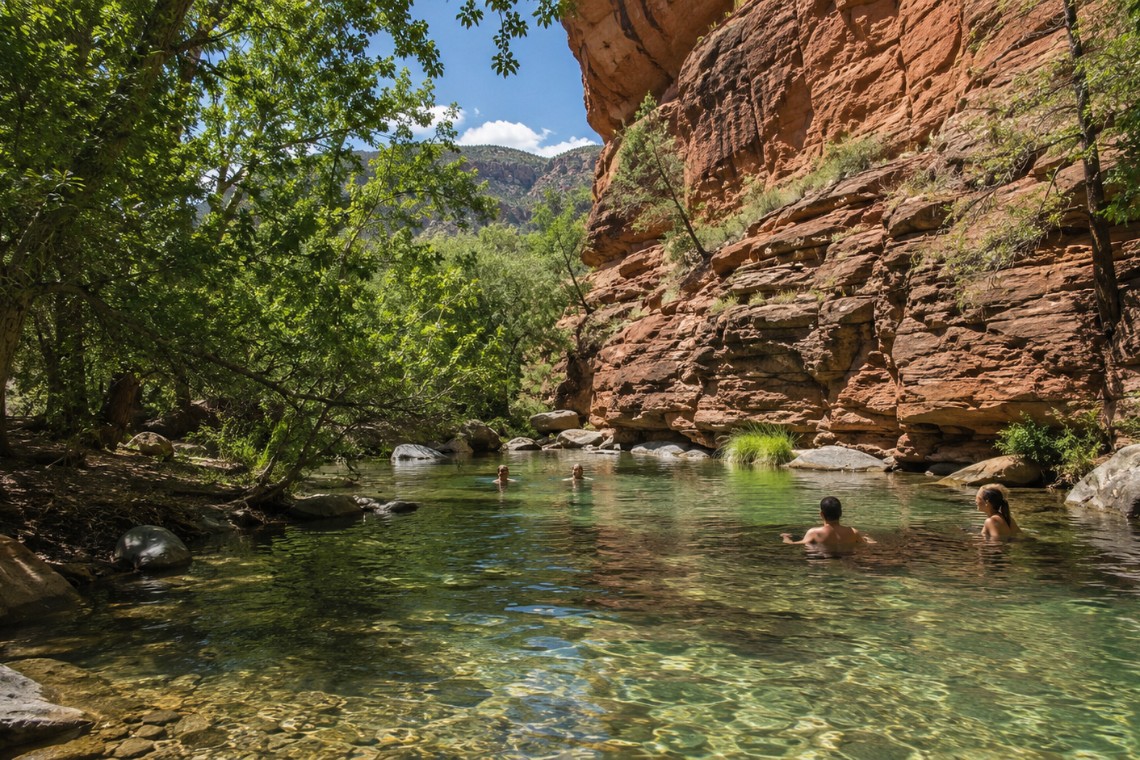
Every summer, approximately four thousand people discover Slide Rock State Park for the first time. The locals discovered it twenty years ago and quietly moved on to somewhere better.
That’s not a knock on Slide Rock. It’s a beautiful piece of Sedona, Arizona’s natural landscape. But when a parking lot fills by 8 a.m. and rangers begin turning cars away by 9, you start to appreciate what local knowledge is worth. The residents who swim in Oak Creek do so on their own schedule, in spots that don’t appear on any brochure.
Why Oak Creek Matters to Sedona’s Identity
Oak Creek is one of the defining features of the Sedona landscape. It runs roughly 56 miles from its headwaters on the Mogollon Rim through Oak Creek Canyon and into the Verde River, and the section that passes through and above Sedona carries clear, cold water through one of the most spectacular canyon settings in the American Southwest.
For residents of Sedona, Arizona, the creek is more than scenery. It is a place to cool off in July, to watch great blue herons fish in the early morning, and to mark the seasons by water temperature and flow. Knowing the creek is a quiet marker of how long someone has lived here.
Beyond Slide Rock: Where Residents Actually Swim
The stretch of creek accessible through Red Rock State Park offers swimming and wading in a far quieter setting than Slide Rock. The park charges a day-use fee and manages visitor numbers more deliberately. Residents who want a reliable morning swim without the chaos of the state park’s peak-season crowds have made it a regular stop.
Grasshopper Point, a day-use area operated by the Forest Service just north of Uptown, provides direct creek access at a location close enough to town to visit on a weekday evening. The swimming hole here is deep enough for jumping from the low rock ledges that line the bank, and the canyon walls above keep it shaded through mid-morning.
Further up Oak Creek Canyon, informal access points along the highway offer pullout parking and footpath access to the creek at various points. Residents who have explored these stretches over multiple seasons know which pools run deepest in early summer and which sections dry to a trickle by late August.
Water Temperature and Seasonal Timing
Oak Creek runs cold. Even in July and August, water temperatures in the canyon sections rarely exceed the mid-60s Fahrenheit. The snowmelt-fed upper sections keep the creek cool well into summer, which is precisely why it functions as such effective relief during Sedona’s hottest months. The swimming season in practical terms runs from late May through September, with peak conditions in June before the monsoon season alters flow patterns.
Post-monsoon conditions in the creek require attention. Heavy monsoon rainfall can increase turbidity, bring debris, and temporarily alter access at certain points. Residents who swim regularly check conditions before heading out during and after significant storm events.
Creek-Adjacent Properties and What They’re Worth
Properties with direct or near-direct creek access command a meaningful premium in the Sedona real estate market. The combination of sound, wildlife, temperature regulation, and sheer beauty that comes with creek adjacency is genuinely rare. There are very few properties in Sedona, Arizona with actual creek frontage, and the ones that come to market attract buyers who understand scarcity.
If creek access is a priority in your search, browsing current Sedona listings by the Oak Creek Canyon corridor is the right starting point. The Uptown Sedona area offers the closest neighborhood proximity to lower canyon access points.
Environmental Stewardship and the Creek
Sedona’s creek culture comes with responsibility. The riparian corridor along Oak Creek is a designated Important Bird Area and supports plant and animal species that depend on the water’s clarity and the banks’ vegetation. Residents who swim here regularly understand what that means in practice: no soap or sunscreen in the water, no trampling of the bank vegetation, no leaving food waste near the shoreline.
The Verde Watershed Association and other local organizations coordinate creek monitoring and restoration work that Sedona residents participate in at meaningful rates. Knowing the creek well enough to swim in it tends to produce the kind of ownership over its condition that no signage can manufacture.
Frequently Asked Questions
Is it safe to swim in Oak Creek in Sedona?
Swimming in Oak Creek is generally safe at established access points, though conditions vary by season and weather. Water runs clearest in late spring before monsoon season. After heavy rains, increased flow and debris make caution appropriate until conditions settle.
Is Slide Rock State Park worth visiting for Sedona residents?
Slide Rock is genuinely beautiful and worth experiencing, but the crowds during peak season make it less practical for regular visits. Sedona residents typically prefer off-peak timing or alternative access points that offer similar creek quality without the parking competition.
Can you swim in Oak Creek year-round in Sedona?
Water temperatures in Oak Creek make comfortable swimming practical from late May through September. The creek flows year-round, but winter temperatures make swimming uncomfortable for most people outside of short dips.
Do you need a permit to access Oak Creek?
Access varies by location. Red Rock State Park and Slide Rock State Park charge day-use fees. Forest Service day-use areas like Grasshopper Point require a Red Rock Pass. Some informal access points along the highway have no fee but limited parking.
How does proximity to Oak Creek affect property values in Sedona?
Creek-adjacent and creek-proximate properties in Sedona carry a significant premium reflecting the rarity of direct water access in a desert environment. Properties with creek frontage are among the most sought-after in the Sedona market.
The residents who know Sedona, Arizona best are usually the ones who discovered it through the landscape first. If the creek, the trails, and the quality of light matter to you, that’s exactly the conversation to have before you start looking at floor plans.
