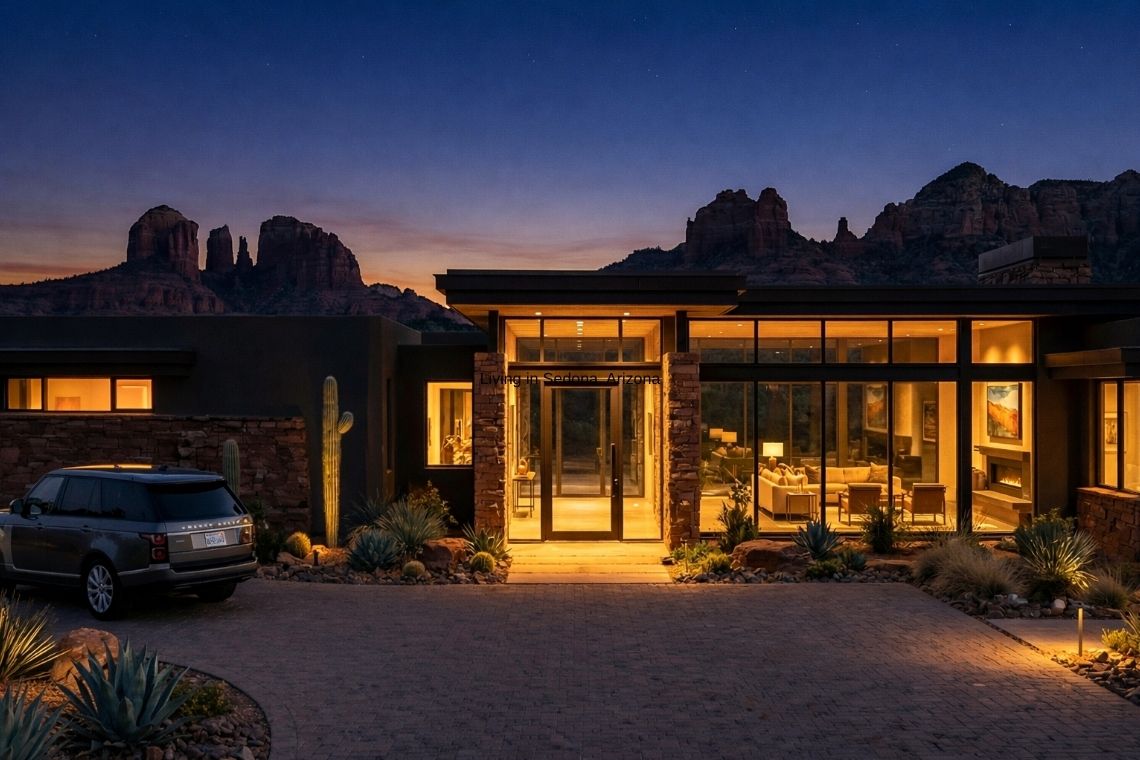
The conversation usually starts with a number. Someone mentions what they paid in property taxes last year, or what their four-bedroom in the Bay Area is worth now, and the math just sits there on the table. Then someone asks: “Have you ever been to Sedona?”
Most people who move to Sedona, Arizona from California did not plan it that way. They visited once. Then they came back. Then one day they realized they were no longer planning a vacation. They were planning a move.
This guide is for the people in that middle moment.
Why California Buyers Choose Sedona, Arizona
The reasons people leave California are well documented. High income taxes, elevated property taxes, cost of living that compresses quality of life even at high income levels. But the reasons people choose Sedona specifically are harder to quantify.
There is something about the red rock landscape of Sedona, Arizona that registers differently than other southwestern destinations. The formations are ancient and monumental, but the scale of the town is intimate. You can be on a world-class trail within minutes of your front door. You can eat at a genuine farm-to-table restaurant without a reservation on a Tuesday. And you can watch the light change on Cathedral Rock from your living room in a way that never becomes ordinary.
For buyers who have spent decades in coastal California, Sedona represents something specific: a place where the lifestyle they imagined when they first moved West is actually attainable.
The Financial Case for Moving from California to Sedona
Arizona vs. California Income Taxes
Arizona’s flat income tax rate has been significantly reduced in recent years, currently sitting well below California’s top marginal rate of 13.3%. For a household earning $400,000 annually, the annual state income tax savings alone from relocating from California to Arizona can reach $30,000 to $50,000 or more, depending on deductions and filing status. Buyers should consult their CPA for personalized projections, as individual circumstances vary. The structural gap between the two states’ tax environments, however, is significant and persistent.
What California Equity Buys in Sedona
This is where the conversation shifts from math to possibility. A California buyer who purchased a median Bay Area home in 2015 and has paid down a typical mortgage is sitting on substantial equity. In Sedona, Arizona, that equity level can purchase a custom-built home with red rock views, outdoor living space, and direct trail access without a mortgage payment at all.
For buyers moving to Sedona from Los Angeles, that same equity ratio applies: what a dated mid-century in a competitive LA neighborhood sells for often equals what a fully renovated, architecturally designed luxury home in Sedona costs. The exchange is real and it changes the nature of how buyers think about the move.
Property Taxes in Arizona vs. California
Arizona’s primary residence property tax rate is generally lower than California’s effective rate once Proposition 13 protections wear off at resale. Sedona, Arizona property tax rates for primary residences run approximately 0.5% to 0.7% of assessed value for most residential properties, though individual assessments vary. California buyers purchasing at resale values after decades of appreciation often find Arizona’s system substantially more favorable, particularly at the luxury price points where Sedona competes.
Cost of Living Adjustments Worth Knowing
Sedona’s cost of living in daily expenses reflects its status as a tourist destination and a small mountain town. Groceries and dining run higher than Phoenix or Tucson averages. However, the elimination of California’s income tax burden, combined with lower property taxes and, for most buyers, the absence of a mortgage on a cash or equity-funded purchase, typically produces a net lifestyle improvement even accounting for Sedona’s premium on everyday goods.
Why Sedona: The Case That Numbers Cannot Make
The financial case is straightforward once you run the numbers. The harder thing to convey is what it actually feels like to live in Sedona, Arizona.
The red rock formations are not scenery. They are the organizing principle of the day. Morning light on Courthouse Butte from your kitchen window sets the tone. A midday hike on the Airport Mesa loop resets whatever the morning brought. The arts community in Uptown Sedona and along Tlaquepaque connects residents to something creative and communal. And the vortex sites, whatever one makes of the energy attributed to them, draw people who are in motion, who are open, who are looking for something more intentional.
Buyers from California often describe their first months in Sedona, Arizona as the feeling of arriving somewhere they did not know they were trying to reach.
Sedona Neighborhoods: Where Do You Fit?
West Sedona
West Sedona is the most residential and community-oriented of Sedona’s major areas. It runs along State Route 89A west of the “Y” intersection and is home to most of the town’s day-to-day services, schools, and neighborhood feel. Buyers who want to live like a local rather than a visitor often gravitate to West Sedona first. Price points range from the $700s to well over $2M for custom homes with red rock views.
Chapel Area
The Chapel Area, named for the Chapel of the Holy Cross perched above the red rocks along SR-179, is one of Sedona’s most prestigious neighborhoods. Properties here tend to be custom or semi-custom, often with dramatic view corridors, and prices reflect that. This is where buyers who want the full Sedona luxury experience and are willing to pay for it tend to look.
Village of Oak Creek
The Village of Oak Creek sits at the southern end of the corridor and offers a strong value-to-lifestyle ratio. Bell Rock and Cathedral Rock views, trail access, and a quieter residential pace characterize the neighborhood. For California buyers who want full Sedona access at a slightly more accessible entry point, VOC is consistently worth a close look.
Uptown Sedona and Surrounding Areas
Uptown Sedona blends residential and commercial uses near the core tourist district. Properties in and near Uptown tend to command location premiums and attract buyers who want walkability to restaurants, galleries, and the energy of the town’s center.
Buying a Home in Arizona: What California Buyers Need to Know
The Buyer Broker Agreement
Arizona, like California post-NAR settlement, requires buyers to sign a written buyer broker agreement before an agent can represent them in a property search. This agreement formalizes the relationship and establishes how buyer agent compensation is handled. In Sedona’s luxury market, buyers should understand this document before signing anything else. A good agent will walk through every line.
Arizona Association of Realtors Forms and Contracts
Arizona transactions use AAR (Arizona Association of Realtors) standard forms. California buyers familiar with the CAR forms will find the structure similar in intent but different in specifics. Key differences include the inspection timeline, the disclosure process, and the escrow structure. Arizona uses title companies rather than escrow companies, and the closing timeline typically runs 30 to 45 days from a fully executed contract.
The Due Diligence Period
Arizona’s AAR Residential Purchase Contract includes an inspection period, during which buyers can terminate for any reason and receive their earnest money back. The length is negotiable, but 10 days is common in the Sedona market. Buyers coming from California, where contingencies have been routinely waived in competitive markets, should understand that Sedona’s luxury market still operates with standard due diligence protections in most transactions.
Water Rights and Well Disclosure
Arizona’s water situation is relevant context for buyers in every part of the state. Sedona proper is served by the City of Sedona and Verde Valley municipal water systems for most properties. Rural properties in unincorporated areas, including some in the Village of Oak Creek corridor, may rely on wells. Buyers should confirm water source early in any due diligence process.
Working With a Local Sedona Real Estate Agent
There is a version of this move that goes smoothly and a version that does not. The difference is almost always whether the buyer had genuine local representation.
Angelo Davis, REALTOR® at RE/MAX Sedona, works exclusively in the Sedona, Arizona market. His practice is built on the Never Alone Guarantee: buyers and sellers are never left wondering what happens next. In a relocation transaction, where the buyer is managing a sale in one state and a purchase in another while also making major life decisions, that kind of communication discipline is not a nice-to-have. It is the difference between a move that goes well and one that doesn’t.
Sedona is a small market with a strong network. Local agents know which properties have been priced correctly, which have hidden complications, and which neighborhoods suit which buyer profiles in ways that no algorithm can replicate. Search current Sedona listings to begin understanding the market, and reach out when you are ready for a conversation.
Frequently Asked Questions: Moving to Sedona from California
Is Sedona a good place to move from California?
Sedona, Arizona is consistently one of the top destinations for California relocators seeking a combination of natural beauty, lower state income taxes, and a genuine luxury lifestyle at a lower price point than comparable California markets. The town’s outdoor recreation, arts community, dining scene, and proximity to Phoenix make it a strong fit for buyers who want a dramatic quality-of-life upgrade without sacrificing access to amenities.
How much does a home cost in Sedona, Arizona?
Sedona, Arizona home prices for luxury residential properties typically begin in the $700s for entry-level homes in competitive neighborhoods and can reach $3M or more for custom builds with premium red rock view corridors. The average sale price in the Sedona market has generally hovered around $1M, though buyers should request a current comparative market analysis from a local agent rather than relying on general averages for purchase decisions.
How much do I save on taxes by moving from California to Arizona?
The tax savings from relocating from California to Arizona depend heavily on income, deductions, and filing status. California’s top marginal income tax rate of 13.3% compares to Arizona’s significantly lower flat rate, and the annual difference for a household earning $300,000 to $500,000 can easily reach $25,000 to $45,000 or more in state income tax alone. Property tax structures in Arizona also tend to favor residential buyers compared to California’s post-Proposition 13 reassessment environment. Buyers should consult their CPA for personalized projections.
What is the best neighborhood in Sedona for California transplants?
California buyers moving to Sedona, Arizona most frequently end up in West Sedona, the Village of Oak Creek, or the Chapel Area, depending on their lifestyle priorities and budget. West Sedona suits buyers who want community infrastructure and everyday convenience. The Village of Oak Creek suits buyers who prioritize trail access and view value. The Chapel Area suits buyers who want the most dramatic luxury experience and are willing to pay a corresponding premium.
How far is Sedona from Phoenix?
Sedona, Arizona is approximately 2 hours north of Phoenix by car via Interstate 17 and State Route 179 or 89A. Phoenix Sky Harbor Airport is the primary air gateway for Sedona residents, though Flagstaff Pulliam Airport is approximately 45 minutes north and offers limited commercial service. Most Sedona residents treat Phoenix as a day-trip destination for major shopping, specialty medical care, and air travel.
Is Sedona a good place to raise a family?
Sedona, Arizona has a relatively small but engaged school community through the Sedona-Oak Creek Unified School District, which serves students from kindergarten through high school. The district includes West Sedona School, Big Park Community School, and Sedona Red Rock High School. Families relocating from California often cite the outdoor lifestyle, small-town community feel, and lower density as significant quality-of-life improvements, particularly for children growing up with direct access to trails, nature, and a tightly knit community.
Do I need a local real estate agent to buy in Sedona?
Sedona, Arizona’s luxury real estate market is small enough that local knowledge creates a genuine advantage for buyers. Local agents understand which properties have been correctly priced, which neighborhoods fit which lifestyles, and how the nuances of Yavapai County and City of Sedona jurisdiction differences affect specific transactions. For a relocation buyer managing a cross-state move, having local representation with strong communication and transaction management disciplines is not optional. It is essential.
If you are planning a move to Sedona from California and want to understand the market before you visit, one conversation is the right first step. Reach out to Angelo Davis, REALTOR® at RE/MAX Sedona, and let’s talk about what the move actually looks like. Know someone else making this decision? Pass this along to them.
