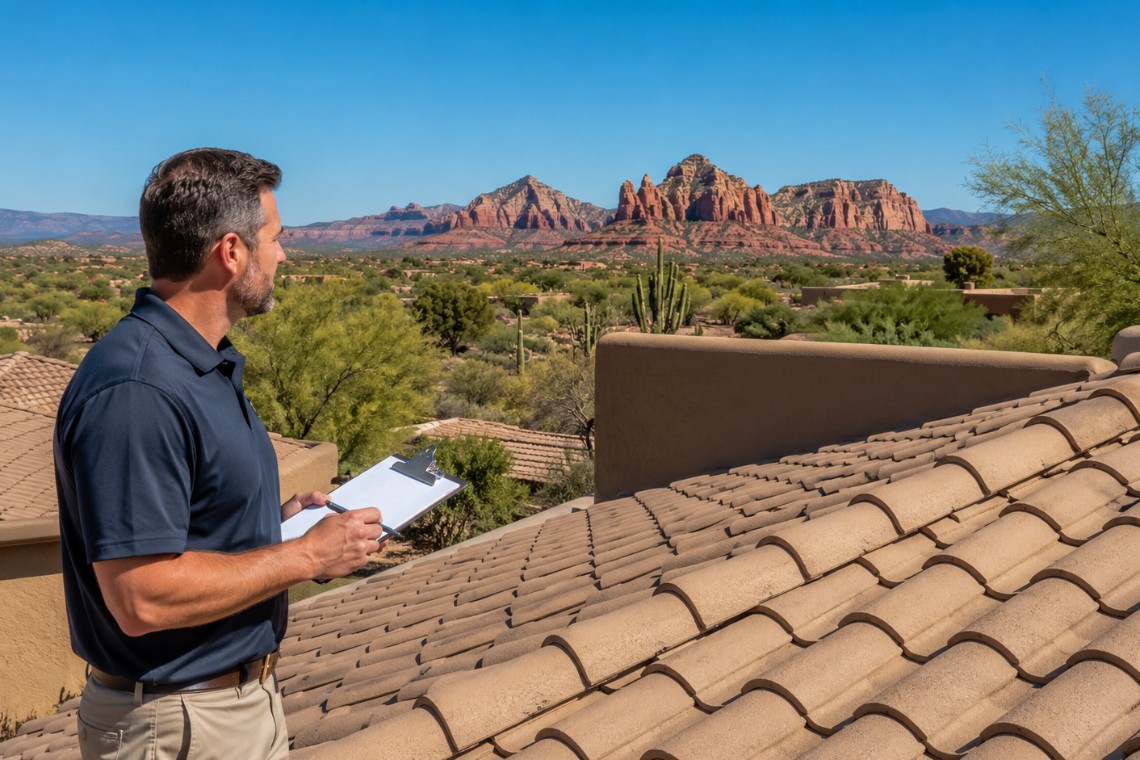
A home inspector in Arizona spends most of their time looking at things that don’t really matter in other parts of the country. The roof. The HVAC system. The stucco cladding. Water sources. Things that, in temperate climates, are almost afterthoughts. In Arizona, they’re literally the systems that keep your house functional through half the year.
This is why Arizona home inspections are different from home inspections in other states. An inspector from Colorado won’t necessarily know what to look for. An inspector who’s been working in Arizona for years has seen every failure pattern that the desert climate creates.
If you’re buying in Sedona, understanding what an inspector should be finding, what matters versus what doesn’t, and how to use inspection results in negotiation changes the whole dynamic of the transaction.
The Arizona-Specific Issues Every Buyer Should Understand
Arizona homes fail in specific ways. Not because of inferior construction, but because the climate creates unique stressors.
Roof failure is the most obvious. Arizona roofs get hammered by sun and heat. A roof that’s 15 years old in Arizona is substantially more degraded than a 15-year-old roof in Florida, despite both being in hot climates. The dry heat causes shingles to become brittle and fail faster. It’s not a defect. It’s the cost of living in the desert.
HVAC systems run constantly June through September. A system installed in 2010 in Scottsdale or Sedona has run more hours than a system in Phoenix that was installed in 2005. The load is simply higher. Efficiency decreases. Maintenance becomes critical.
Stucco cracks are nearly universal in Arizona homes more than 10 years old. The expansion and contraction from extreme temperature swings creates stress. Settling of the foundation adds more stress. The stucco separates. It’s not structural. It’s cosmetic and maintenance-based.
Dust and debris accumulation in HVAC systems, ducts, and around the foundation is standard. You’re living in the desert. Dust happens. It’s managed through regular maintenance, not by avoiding it.
Choosing the Right Inspector: Experience Matters
Not all inspectors are created equal. An inspector who’s worked in Arizona for 15 years understands exactly what’s normal, what’s concerning, and what’s actually a problem versus what’s inevitable degradation.
An inspector from out of state might flag issues as critical that Arizona inspectors would note as maintenance items. They might miss Arizona-specific concerns that are obvious to local inspectors. They might not understand the regulatory environment or local building practices.
When you hire an inspector, ask specifically: How many years have you been inspecting homes in Arizona? What are the most common issues you find in Sedona specifically? Have you worked with homes in this particular neighborhood? These questions tell you if you’re getting local expertise or generic inspection services.
Work with someone who actually knows Arizona and Sedona specifically. Angelo Davis works with inspectors regularly and knows which ones understand Arizona-specific issues and which ones don’t. This is valuable guidance worth asking for.
The Roof Inspection: What to Look For
Arizona roofs are the first thing an inspector should assess. What you’re looking for is remaining life, current condition, and likelihood of failure within the next three to five years.
Modern shingles in Arizona typically last 12-15 years. Older shingles (pre-2000s) often last 10-12 years. The variation depends on exposure, color (darker roofs degrade faster), maintenance, and original shingle quality. A 2010 roof in Sedona is probably getting close to replacement. A 2015 roof probably has five to ten years left. A 2020 roof probably has 10-15 years.
What the inspector should document: granule loss (shingles losing their protective coating), curling or lifting shingles, any areas where shingles have blown off or are missing, gutter condition and whether gutters are pulling away from the fascia. These details tell you whether you’re looking at minor maintenance or imminent replacement.
Cost context: Arizona roof replacement typically runs $8,000-$15,000 for a standard residential home depending on size and slope. For many buyers, a roof that needs replacement within the next three years becomes a price negotiation point.
HVAC Systems: The Workhorse of Arizona Living
HVAC systems in Arizona are running 20+ hours per day June through September. That’s meaningful operational stress. An inspector should evaluate whether your system can handle that load.
What to look for: Age of the unit. Units installed pre-2010 are getting old. Units installed 2010-2015 have moderate life left. Units 2015+ are relatively new. Noise and vibration when running. Unusual sounds suggest failing components. Whether the system can cool the home to a reasonable temperature (78 degrees when set to cool). System efficiency ratings (older units are often much less efficient).
Pre-purchase HVAC inspections are common and smart. Having an actual HVAC technician (not just a general inspector) evaluate the system tells you whether you’re looking at a system that will run another 10 years or one that will need replacement within 2-3 years. That’s a significant cost difference.
The harsh reality: an HVAC replacement in Arizona runs $8,000-$15,000 depending on system type and home size. You need to know this cost going in.
Stucco and Exterior Cladding: The Inevitable Cracks
Nearly every Arizona home has stucco cracks. The question isn’t whether they exist. It’s whether they’re cosmetic or structural.
Hairline cracks that don’t get wider when you look year-to-year are cosmetic. They’re part of Arizona homes. They’re cosmetic maintenance that happens periodically. Wider cracks (quarter inch or more) or cracks that appear to be spreading suggest more significant movement or settling.
What the inspector should identify: Location of cracks. Cracks around door and window frames suggest settling or foundation movement. Cracks in the field of stucco are more likely just thermal movement. Pattern of cracks. Horizontal cracks across large sections suggest structural issues. Random cracks suggest normal settling.
The practical reality: minor stucco cracking is normal in Arizona. It’s a maintenance item, not a defect. Budget $500-$1,500 annually for stucco repair and maintenance if you’re keeping up with it. If you ignore it, problems compound and become more expensive.
Roof, HVAC, and Stucco: The Arizona Trinity
These three systems account for roughly 80 percent of what Arizona home inspectors actually flag and what Arizona homeowners end up paying for maintenance. They’re not defects. They’re the cost of living in the desert.
Understanding the condition of all three going in lets you price the property accurately and budget for maintenance realistically. A home with a new roof, a newer HVAC system, and recently-repaired stucco is worth paying a premium for. A home that needs all three items repaired within the next three years should be priced accordingly or you should negotiate.
Water and Drainage: A Critical Arizona Consideration
Arizona’s monsoon season brings heavy rain that comes down extremely fast. Drainage and water management are critical. An inspector should evaluate grading around the foundation, gutter systems, and whether water is being directed away from the home or toward it.
Homes in washes or low areas are at higher risk for flooding during monsoon season. This isn’t a defect. It’s a location reality that requires different insurance and maintenance approaches.
If your home has a septic system (common in rural Sedona areas), the inspector should specifically evaluate septic condition. Septic replacement runs $8,000-$15,000 and can require permitting and soil evaluation that takes months. Knowing the system’s age and condition going in matters enormously.
Well Water Systems: Understanding Your Water Source
Some Sedona homes draw from municipal water. Many draw from wells. If your home has a well, the inspector should document the well depth, yield (gallons per minute), and whether any water quality issues have been documented.
Well water in Arizona can have mineral content, sulfur smell, or other characteristics that differ from municipal water. Understanding this ahead of time prevents surprises. You might also want to do water quality testing separately from the general inspection.
The practical consideration: well systems are your responsibility to maintain. Municipal water means the city is responsible for quality and delivery. If you’re on a well, budget for potential treatment systems or replacement costs down the road.
Radon and Air Quality
Arizona’s high desert elevation and geological composition means radon is a consideration in some areas. The inspector should document radon test results if testing has been done. If not, many buyers do radon testing as a separate line item.
Elevated radon levels can be managed with ventilation systems, but it’s good to know going in.
Termites and Desert Pests
Arizona homes are susceptible to termites, especially in homes with wood components or older homes that have had moisture issues. The inspector should note any evidence of termite activity or risk factors. A separate termite inspection is often recommended and typically costs $150-$300.
This is less about catastrophic risk and more about understanding what maintenance or prevention is needed. Many Arizona homes are on preventative termite treatments. Understanding the system and whether it’s current matters.
Pools and Spas: Special Considerations
If the home has a pool or spa, the inspection should evaluate equipment condition, water chemistry, and whether systems are functioning properly. Pool equipment (pumps, filters, heaters) follow similar degradation curves to HVAC systems. Older pools might need significant investment.
Equipment replacement can run anywhere from $2,000 (pump replacement) to $15,000+ (complete pool renovation). Understanding the pool’s condition going in lets you price the property accurately.
Elevation and Temperature Considerations
If you’re buying at higher elevations in Sedona (particularly above 4,800 feet), elevation-specific concerns include occasional freeze-thaw damage, potential for winter precipitation, and higher heating costs in winter. The inspector should note whether the home is winterized appropriately and whether there are drainage or freeze-risk issues.
Using Inspection Results in Negotiation
Once you have the inspection report, you have two options: accept the property as-is, or negotiate repairs or price adjustments based on findings.
In Sedona’s market, direct price negotiation based on inspection findings often backfires. Sellers often know about issues and interpret price requests as adversarial. Better approach: understand the actual repair costs from contractors, then decide whether the property is worth the price as-is.
If it’s not, you can negotiate. But frame it as “given the actual condition of the property, we need to find a price that reflects the repairs needed” rather than “you hid problems and now you have to pay.”
Many Sedona buyers negotiate specific repairs instead of price. “Replace the HVAC system before closing” is often more acceptable to sellers than “reduce price by $10,000 because the HVAC system is old.” You get the outcome you need. The price stays intact.
The Inspection Timeline
Most purchase contracts include a 7-10 day inspection contingency. That’s the window to have the inspection completed, review the results, and decide how to respond.
For Sedona properties, requesting the inspection happen early in that window gives you maximum time to evaluate and negotiate. Some buyers also do pre-inspection before even making an offer, which eliminates inspection surprises and can make your offer stronger.
Working With Contractors for Reality Checks
When the inspection reveals significant issues (roof, HVAC, septic), it’s worth getting contractor quotes for actual repair costs before deciding whether to negotiate. An inspector saying a roof needs replacement is one thing. A contractor quoting you actual replacement cost is another.
Spending $300-$500 on contractor quotes often saves you thousands in negotiation by giving you actual numbers rather than estimates.
The Inspection Report as Your Maintenance Bible
After you buy the home, keep the inspection report. It becomes your baseline for understanding the property’s condition and what maintenance might be needed going forward. When you eventually sell, the inspection you do now will inform inspections future owners do.
Ready to Order an Inspection?
When you’re close to making an offer on a Sedona home, reach out to Angelo Davis for inspector recommendations. He knows which inspectors understand Arizona-specific issues and which ones don’t. He also understands how to use inspection results strategically in negotiation, which can save you thousands of dollars in the transaction.
—
