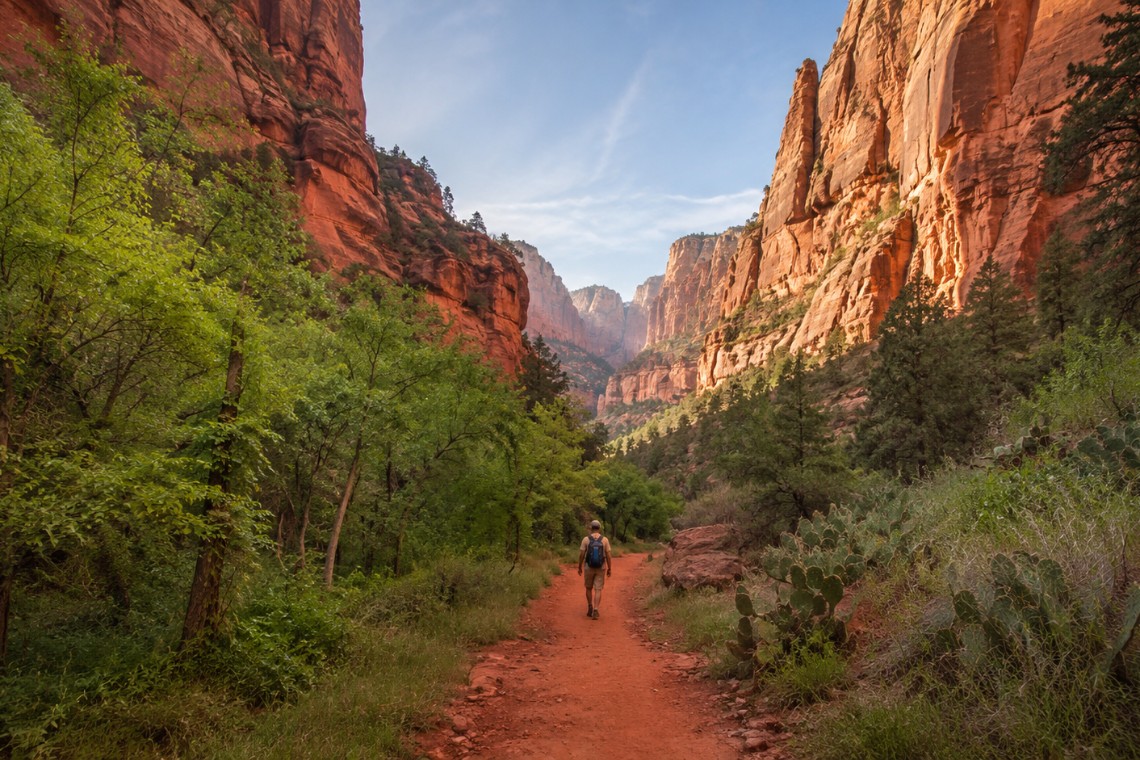
Most Sedona, Arizona hikes give you one thing exceptionally well. Devil’s Bridge gives you an arch. Cathedral Rock gives you a scramble with a panoramic view at the top. West Fork gives you a canyon corridor with water. Boynton Canyon gives you all of it over six miles: towering sandstone walls, a recognized vortex site, a hidden alcove near the trailhead that most visitors walk past entirely, and a turnaround point at the head of the canyon that feels genuinely remote even on a moderately busy day.
It is the hike that Sedona residents most often recommend when someone asks for a full day on the trail. Not because it is the most dramatic single moment, but because the complete experience across the full distance earns that description in a way that shorter hikes with single highlights do not.
Where Boynton Canyon Is and How to Get There
Boynton Canyon sits in the far western section of West Sedona, Arizona, accessed via Dry Creek Road off Highway 89A. From the Y intersection, head west on 89A approximately 2.5 miles, turn right onto Dry Creek Road, and continue north for about 3 miles to the signed Boynton Canyon trailhead. The Enchantment Resort sits at the end of this road. The trailhead parking area is on the left before the resort entrance.
The Red Rock Pass is required for parking. Day passes are $5 per vehicle. The America the Beautiful annual pass covers the fee. The trailhead parking area holds approximately 40 vehicles and fills by 8 AM on weekends in spring and fall. Arrive by 7:30 AM if you want parking without the overflow walk, or plan a weekday visit.
For anyone who is staying in West Sedona, the drive to the Boynton Canyon trailhead takes approximately 15 minutes from most West Sedona neighborhoods. The drive itself through the Dry Creek Basin is worth noting. The red rock corridor along the upper section of Dry Creek Road, with Secret Mountain and Boynton Canyon walls visible ahead, is one of the more dramatic approaches to any Sedona trailhead.
The Hike: Distance, Terrain, and What the Canyon Actually Delivers
The main Boynton Canyon trail runs approximately 6.1 miles round trip with 600 feet of cumulative elevation gain. The elevation gain is gradual rather than concentrated. There is no single steep section that will stop most hikers. The trail climbs steadily as it moves deeper into the canyon, but the grade is consistent and manageable for people who hike occasionally.
The first half mile passes through juniper and pinon forest as the trail curves around the edge of the canyon mouth. This section is relatively open with good views back toward the Dry Creek Basin. The forest becomes denser and the sandstone walls higher as the trail moves into the canyon proper. By mile one, the walls rise several hundred feet on both sides and the trail is following the canyon floor between them.
The Enchantment Resort’s buildings are visible from the trail around the one-mile mark, set back into the canyon wall above the trail. The resort has negotiated access that keeps its grounds separated from the public trail. After passing the resort, the trail enters progressively wilder terrain. The canyon floor widens and narrows in alternating sections. The sandstone formations become more varied and dramatic. By mile two, the canyon has a genuine wilderness quality that the earlier sections do not.
The turnaround at the canyon head involves a short scramble up a rocky slope to a viewpoint above the canyon floor. The view looking back down the full length of Boynton Canyon, with the walls framing the open desert beyond the mouth several miles away, is one of the defining photographs of this hike. Most people spend 15 to 30 minutes at this viewpoint before returning.
The Vortex at Boynton Canyon: What It Is and Where It Is
Boynton Canyon contains one of Sedona’s four recognized vortex sites, and this is where first-time visitors often experience their first confusion. The vortex is not at the head of the canyon where the scenery is most dramatic. It is near the trailhead, approximately half a mile from the parking area.
The Boynton Canyon vortex is associated with a specific sandstone spire called the Kachina Woman, visible from the main trail on the left side as you head into the canyon. The spire rises above the canyon rim and is distinctive enough that most hikers who know to look for it will recognize it. The vortex area is on the trail immediately adjacent to this spire.
Local guides and spiritual practitioners describe the Boynton Canyon vortex as balancing energy, combining what they identify as upflow and inflow characteristics. This makes it distinct from Bell Rock (described as purely upflow) and Cathedral Rock (described as inflow). Whether you approach the vortex as a geological curiosity, a spiritual experience, or simply a point of cultural interest, the setting itself is worth pausing at.
The physical evidence most visitors look for is the spiral-trunk juniper trees. These trees grow in helical patterns not found in juniper trees elsewhere in the desert, and they concentrate in areas near Sedona’s vortex sites. Several are visible near the Boynton Canyon trailhead and along the first half mile of trail.
Subway Cave: What It Is and Why Most Hikers Miss It
Approximately 100 yards from the main Boynton Canyon trailhead, an unofficial but well-worn spur leads to a small sandstone alcove called Subway Cave. The cave mouth is visible from the parking area if you know where to look. It sits above the trail level on the canyon wall to the right as you face the canyon.
The access involves a brief scramble up a rocky slope, nothing technical, approximately 50 feet of elevation gain from the trail. The cave itself is a shallow alcove, perhaps 30 feet deep and 20 feet wide at the mouth. It provides a sheltered view back toward the Dry Creek Basin and the canyon entrance below. The name comes from the smooth, rounded sandstone ceiling and walls that give the space an almost architectural quality.
Sedona residents who know the canyon well use Subway Cave as a quiet morning spot before the main trail fills with hikers. Adding it to the Boynton Canyon hike adds roughly 15 to 20 minutes to the total time and requires almost no additional effort beyond the initial scramble. It is the detail that most trip reports omit and that most visitors who find it remember as one of the better moments of the hike.
Wildlife and Natural Features in Boynton Canyon
Boynton Canyon is designated wilderness area within Coconino National Forest, which means no mechanized vehicles and limited development. The wildlife density in the canyon is higher than on many of the more trafficked Sedona trails precisely because the designation provides stronger habitat protection.
Mule deer are common in the early morning hours, particularly in the lower canyon sections near the water that collects seasonally along the trail. Collared peccaries (javelina) are occasionally seen in the brush at the canyon mouth. Coyotes are more often heard than seen. Raven populations are year-round residents of the canyon walls.
Bird diversity in Boynton Canyon is notable for a desert environment. The combination of riparian habitat along seasonal water channels and the cliff face habitat above supports both canyon-adapted species and woodland species. Cooper’s hawks and red-tailed hawks hunt the canyon rim. Phainopeplas, distinctive crested black birds, are present in the mistletoe-rich juniper sections of the lower trail.
The seasonal water in the lower canyon is most reliable in spring. By late May in most years the water has receded. After monsoon rains in July and August, water can appear in sections of the canyon floor, though the trail itself is not significantly impacted.
What Buyers Looking at West Sedona Should Know About Boynton Canyon
The Boynton Canyon corridor is one of the primary trail access selling points for buyers evaluating West Sedona, Arizona properties, and for good reason. The canyon is permanently protected wilderness. It cannot be developed. Properties in communities adjacent to Dry Creek Road and the upper section of Boynton Pass Road, including some parcels in the Seven Canyons area and properties near the National Forest boundary, offer meaningful proximity to this trailhead.
The Dry Creek Basin corridor more broadly, which includes Boynton Canyon, Long Canyon, Fay Canyon, and the Mescal/Devil’s Bridge trail network, represents the most concentrated trail access available to any West Sedona residential address. Buyers who want to integrate daily or near-daily hiking into their lifestyle find that the specific neighborhood within West Sedona matters significantly.
Angelo Davis, REALTOR® at RE/MAX Sedona, works with buyers for whom trail access is a defined priority rather than a general preference. The difference between a property that puts you 5 minutes from the Boynton Canyon trailhead and one that puts you 20 minutes away is real and shows up in whether the trail actually gets used regularly. Understanding which West Sedona streets deliver that proximity is part of what local representation provides.
Frequently Asked Questions
How long is the Boynton Canyon hike in Sedona?
Boynton Canyon trail in Sedona, Arizona is approximately 6.1 miles round trip with 600 feet of cumulative elevation gain. The elevation gain is gradual and distributed across the full length of the trail. Most hikers complete the full trail including the canyon head viewpoint in 3 to 4 hours at a moderate pace with stops.
Is Boynton Canyon one of Sedona’s vortex sites?
Yes. Boynton Canyon is one of the four recognized vortex sites in Sedona, Arizona. The vortex location is near the trailhead, approximately half a mile from the parking area, associated with the Kachina Woman sandstone spire visible from the main trail. It is described as balancing energy combining upflow and inflow characteristics, distinct from the other three Sedona vortex sites.
What is Subway Cave on Boynton Canyon trail?
Subway Cave is a small sandstone alcove approximately 100 yards from the Boynton Canyon trailhead in Sedona’s West Sedona, Arizona, accessible via a short unofficial spur and brief scramble from the main trail. The cave is a shallow natural alcove with smooth rounded walls that provides a sheltered viewpoint back toward the Dry Creek Basin. Most visitors walk past it without knowing it is there.
Is Boynton Canyon trail dog friendly?
Dogs are permitted on Boynton Canyon trail in Sedona, Arizona on a leash no longer than 6 feet. The trail terrain is manageable for most dogs across the full length. The longer distance of 6.1 miles round trip makes water management for dogs important, particularly from April through October. Carry at least 1 liter of water per dog for the full trail.
Is Boynton Canyon trail crowded in Sedona?
Boynton Canyon is one of West Sedona’s most popular trails and sees significant traffic on weekends from February through May and October through November. The trail length distributes hikers more effectively than shorter destination trails, so crowding is less concentrated after the first mile. Weekday visits and early morning weekend arrivals before 7:30 AM significantly reduce the experience of congestion.
Can beginners hike Boynton Canyon in Sedona?
Fit beginners can complete the Boynton Canyon hike in Sedona, Arizona. The 6.1-mile round trip is a committed full-day hike for beginners who are not regular trail users. A shorter out-and-back to the vortex site and Subway Cave area at the 2-mile mark offers the canyon character at a more accessible distance without committing to the full trail.
—
Know someone who has been asking about Sedona trails and what a full day on the red rock actually looks like? Pass this along and let the canyon make the case.
